
Faculty advisors play a critical role in ensuring that research conducted under their supervision meets ethical, regulatory, and cultural standards. At Navajo Technical University, faculty guide student and community researchers through the Institutional Review Board (IRB) process, helping them design responsible studies, protect participant rights, and uphold Diné values and data sovereignty.


Use the screening questionnaire to determine if your project requires IRB review.
Complete the checklist and gather all required documents for submission.
Submit through the portal and respond to any IRB committee requests.

The following faculty resources can be found on this page below
Take the four question screening quiz to determine if a project requires IRB review.
Learn the basics of ethical research, IRB requirements, and compliance standards.
Provide appropriate time estimates for successful IRB submission approval.
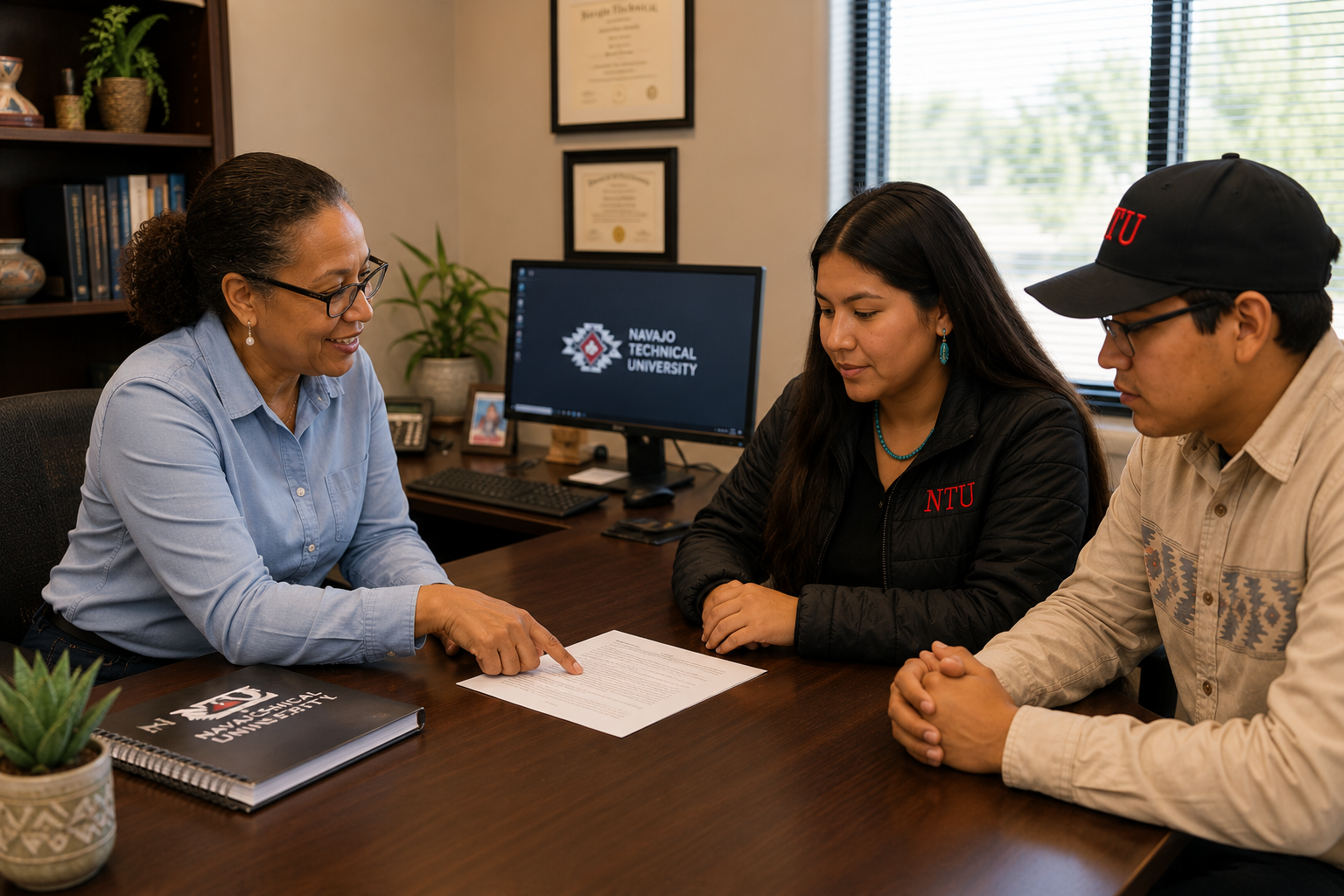

All research involving human subjects conducted by students are to be supervised by a faculty member and be reviewed and approved by the Committee on Institution Research prior to initiation. Investigators may not solicit subject participation or begin data collection until they have received written approval from the CIR.
The faculty advisor has the responsibility for (1) making the decision whether student research activities involving human participants meet eligibility for CIR review; (2) overseeing all research related activities; and (3) assuring that ethical principles are adhered to in the conduct of the project.
An example: consider a student who undertakes an individual or class project that does not involve a vulnerable population and involves no risk to the subjects of the study. The student delivers a presentation on campus (e.g., poster or showcase session or an oral presentation before faculty and peers.) This project would not require CIR review. However, if the results of this otherwise “no or low-risk” project may/might be disseminated at a professional conference, submitted for publication, or published on the World Wide Web, government regulations require prior review by CIR.

It is important to submit your full application well in advance to ensure you receive approval in time for your project to begin. The IRB approval process can vary significantly based on several factors, including the type of research, NTU policies, and the time of the year. Here is a general outline of the process, which can take up to 3 months:
1-2 weeks
Assess if your project (with faculty member) requires IRB approval based on the nature of the research.
1-4 weeks
Complete the IRB application, including all necessary documents and training.
Submit your application to the IRB for review.
1-2 weeks
The IRB conducts an initial review of your application.
2-4 weeks
If required, your application is reviewed by the full board (scheduled meetings).
1 week
Receive notification of approval or required modifications.
Whenever possible, IRB approval should be secured in the semester prior to data collection
Title 45 Code of Federal Regulations Part 46 (45 CFR 46) Protection of Human Subjects specifies federal regulations for the conduct of research involving human subjects. All human subjects research at Navajo Technical University must be conducted in accordance with 45CFR46. Regulations are available at http://www.hhs.gov/ohrp/humansubjects/guidance/45cfr46.html
(Ref: 21 CFR Part 312, 812, 45 CFR 46.101(b)(4), (b)(3), 45 CFR 46.402(a), 63 FR 60364-60367, November 9, 1998.)

This platform is designed to support researchers, students, and community partners in conducting ethical, respectful, and compliant research.